
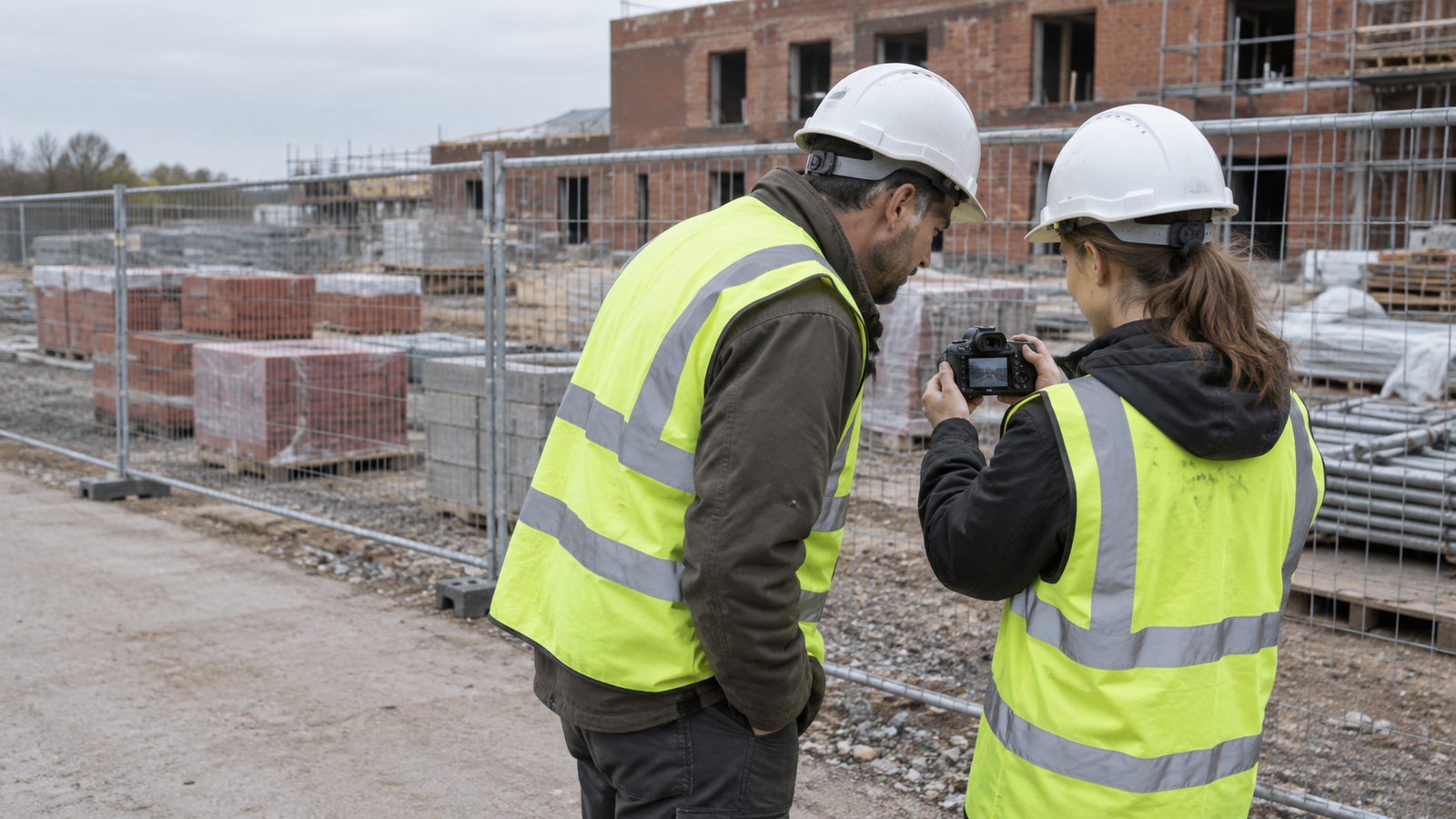
You may still be able to discuss aspects of your expertise, provided you have permission and stay within the restrictions that apply. Start by confirming what can be shared. An unnamed project is not automatically an approved project.
Establish the boundary before creating content
Ask the relevant client contact to confirm the restrictions in writing. Clarify whether they cover the client name, location, images, programme information, technical details or all public references to the work.
Check any contractual requirements through the appropriate person in your business. Site access permission and permission to publish marketing content are separate matters.
Do not assume that removing a logo makes a photograph anonymous. Hoardings, drawings, distinctive architecture and neighbouring buildings may still reveal the project.
Build the explanation around an approved lesson
Where permission allows, focus on the working challenge rather than the identity of the development.
For example, you could explain how your team planned access around other trades, prepared for a difficult installation or coordinated an inspection sequence. Include only details cleared for publication.
A useful structure is to describe the type of challenge, the approach taken and the evidence you can share. Avoid adding a precise location, value or completion date if that combination could identify the project.
Create content away from the restricted site
You can explain a general method using approved workshop footage, a demonstration or an interview with a technical lead. Clearly label illustrative material so viewers do not mistake it for footage of the confidential project.
Another option is a discussion about lessons from the type of work you undertake, without referring to a particular contract at all.
These pieces need substance. Ask the person involved what they check, what can go wrong and how they prepare. Their explanation gives the content value without relying on a recognisable client name.
Give someone responsibility for approval
Build review time into the publishing plan. Send the proposed words and visuals together, because a harmless caption can become identifying when paired with the wrong image.
Keep a record of the approved version and avoid adding project details later when adapting the content for another channel. If permission is unclear, hold the piece back.
Plan the content with The Social Construct
The Social Construct creates construction-focused social content, site video and leadership content for subcontractors and specialist contractors.
Bring the team your approved material and the restrictions around it. The planning conversation can focus on which aspects of your expertise can be shown clearly, while keeping client approval central to the process.